
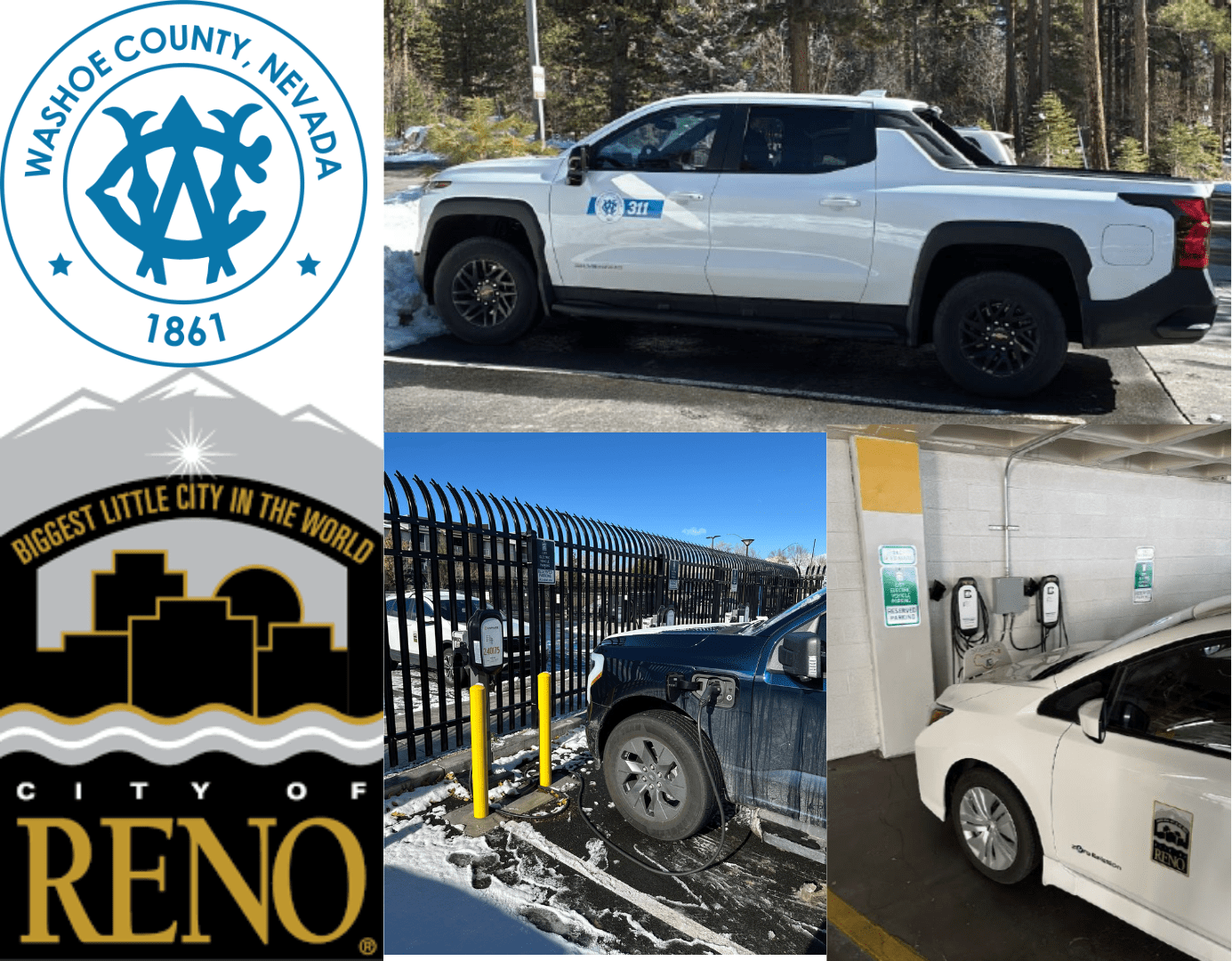
Advancing Fleet Electrification in Reno and Washoe County
As cities and counties across Nevada look to reduce air pollution and operating costs, fleet electrification is one of the most impactful opportunities to advance clean energy solutions at the local level. Through support from the Municipal Investment Fund (MIF), the Nevada Clean Energy Fund (NCEF) partnered with the City of Reno and Washoe County to develop a comprehensive fleet electrification infrastructure plan that would lay the groundwork for scalable, cost‑effective adoption of electric vehicles (EVs) across municipal fleets.
To deliver this work, NCEF and its municipal partners selected HDR, Inc. through a competitive procurement process. HDR developed a detailed EV charging infrastructure concept design and cost analysis with support from utility partner NV Energy. The plan will help both jurisdictions understand what it would take, technically and financially, to electrify portions of their light‑duty fleets across multiple facilities.
Project at a Glance
- Partners: Nevada Clean Energy Fund, City of Reno, Washoe County
- Consultant: HDR (selected via competitive bid)
- Focus: Light‑duty municipal fleet electrification
- Key Recommendation: Prioritize Level 2 charging; use DC fast charging only when operationally necessary or existing onsite electrical capacity exists
- Study Documents:
From Strategy to Implementation
The resulting fleet electrification plan evaluated four municipal sites, two operated by the City of Reno and two by Washoe County, and provided:
- Conceptual EV charging infrastructure layouts
- Utility coordination and electrical capacity assessments
- Budgetary cost estimates for construction and design
- A roadmap for moving from concept to implementation
Across all sites, the final plan evaluated and prioritized overnight Level 2 charging for light‑duty vehicles, reflecting both the operational realities of municipal fleets and the rapidly improving range and performance of EVs in this segment. Installation of DC fast charging was evaluated, and, due to cost and complexity of installation, recommended only where operational needs clearly justified it, such as for public safety applications, or where existing onsite electrical capacity already exists.
Key Insights for Municipal Fleet Electrification
One of the most valuable outcomes of this project was the clarity it provided around the true costs and complexities of charging infrastructure. While DC fast charging can play an important role in certain use cases, the analysis reinforced a key takeaway for municipalities and private fleets alike:
Level 3 (DC fast) charging is significantly more expensive and complex than many organizations initially expect.
High equipment costs, electrical upgrades, and utility coordination requirements can quickly drive up project budgets. In contrast, Level 2 charging, especially when paired with overnight dwell times, can meet the needs of most light‑duty municipal fleets at a fraction of the cost. For many future adopters, leveraging existing public fast‑charging infrastructure for occasional needs may be more cost‑effective than installing DC fast chargers on site.
Unlocking Future Opportunities
Beyond the immediate infrastructure planning, this project was designed to support long‑term, replicable impact. The fleet electrification plan serves as a template for future municipal and private fleet projects by:
- Demonstrating why technical and economic analyses are an important step in the overall process and what the result of a study might look like
- Identifying infrastructure needs early to avoid costly redesigns later
- Providing example cost estimates that can help early planning efforts
- Highlighting opportunities to combine public and private capital to electrify fleets at scale
These insights are already translating into action. As a direct result of the work completed through this project, the City of Reno has decided to retain HDR for a follow‑up study. This next phase will include a more detailed design and the construction documents needed to competitively bid EV charging infrastructure installation at the City Hall Parking Garage, moving the project from planning to shovel‑ready implementation.
Benefits Beyond Government Fleets
While the plan was developed for public agencies, its impact extends well beyond municipal operations. The Washoe County, City of Reno, and NCEF teams hope this work will also help private fleet owners in the region better understand the benefits, costs, and practical considerations of electrifying their vehicles.
By sharing real‑world data on infrastructure requirements, costs, and charging strategies, this project provides a valuable reference point for businesses, nonprofits, and institutions considering their own fleet transitions and reinforces Reno and Washoe County’s leadership in clean energy innovation.
Looking Ahead
Fleet electrification is not a one‑size‑fits‑all solution, but with thoughtful planning, strong public‑private partnerships, and realistic infrastructure strategies, it can deliver meaningful economic and environmental benefits. This project demonstrates how municipalities can take a measured, data‑driven approach, one that reduces risk today while unlocking larger opportunities for clean transportation tomorrow.
This project was made possible by the Coalition for Green Capital and was supported by ICLEI – Local Governments for Sustainability USA (ICLEI USA).