
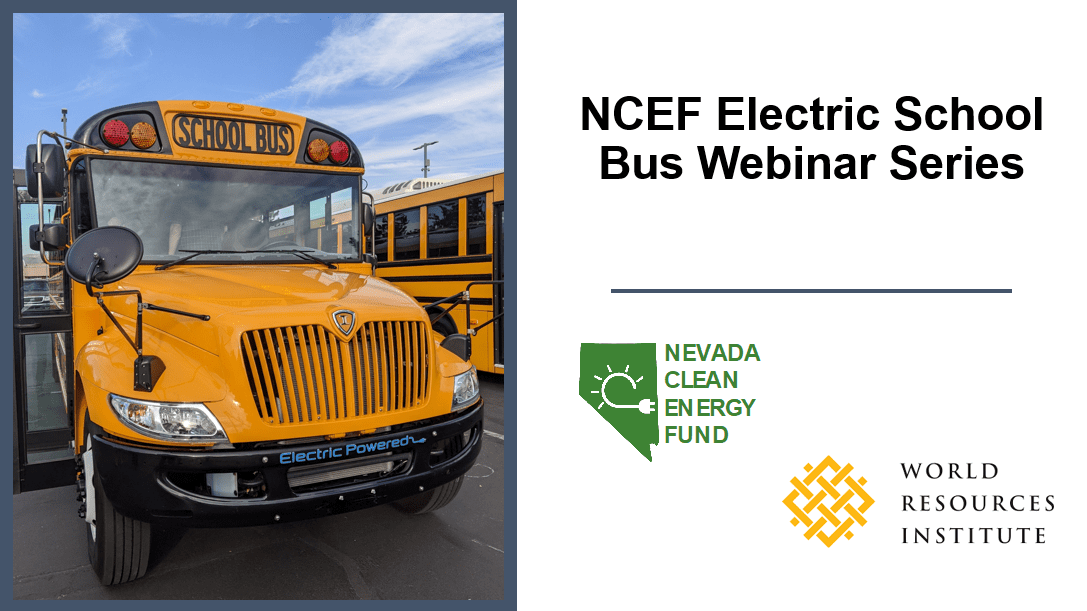
Nevada’s Electric School Bus Webinar Series
Transitioning to electric school buses is not just a technology shift, it requires new knowledge, new planning approaches, and thoughtful attention to equity, cost, and operational realities. With funding and support from the World Resources Institute (WRI), the Nevada Clean Energy Fund (NCEF) developed a three‑part Electric School Bus webinar series tailored specifically to Nevada school districts.
The goal of the webinar series was to build confidence and foundational understanding among school district transportation leaders by grounding participants in the why, what, and how of electric school bus adoption. Informed by WRI’s national Electric School Bus Initiative and NCEF’s boots-on-the-ground experience implementing the EPA’s Clean School Bus Program, the series focused on helping districts:
- Understand the health, air quality, and climate benefits of electric school buses, especially for students who are disproportionately exposed to diesel pollution
- Address common barriers to adoption, including upfront costs, infrastructure planning, range anxiety, and unfamiliar technology
- Learn from real‑world experience and peer examples to demystify electric school bus operations
- Gain practical insight into route planning, charging, and fleet decision‑making to support early pilots and long‑term planning
- Support a more equitable transition, recognizing that older diesel buses and pollution burdens are often concentrated in rural, low‑income, and underserved communities
Recognizing that many rural and geographically-dispersed districts face barriers to attending in‑person trainings, the webinars were intentionally delivered virtually and recorded, making them accessible to districts across the state.
Webinar Series Overview
Webinar 1: Understanding Electric School Bus Benefits & Overcoming Key Barriers
This opening session introduced the benefits of electric school buses including health benefits, operational cost savings and available incentives. Joanne Leovy, MD from Nevada Clinicians for Climate Action covered pollution and health impacts of diesel buses. The session also included a discussion with Seth Canning, Director of Transportation at Elko County School District, who shared Nevada‑specific experience.
Webinar 2: Range Anxiety & Route Planning
The second webinar focused on electric bus range and how districts can plan routes with confidence. Topics included real‑world range expectations, the impacts of hot and cold weather on performance, charging fundamentals, and best practices for route selection. Craig Beaver, Administrator for Transportation at Beaverton School District in Oregon, shared lessons learned from more than five years of managing electric school buses, including strategies for cold‑weather operation and effective charging planning.
Webinar 3: Buses & Chargers — Selection and Reliability
The final session explored what districts should know when selecting electric buses and charging infrastructure. Alex Ramirez from Model 1 discussed bus selection, while Bradley Barker from Highland Fleets covered charging solutions, software, and pre-deployment planning best practices. The session emphasized early planning to ensure a smooth transition to operating electric school buses.
Thank You to Our Partners and Speakers
This webinar series was made possible through the support of World Resources Institute, whose partnership helped shape a high‑quality, practical learning experience for Nevada school districts.
We also thank our guest speakers for sharing their expertise and real‑world experience:
- Joanne Leovy, MD, Nevada Clinicians for Climate Action
- Seth Canning, Elko County School District
- Craig Beaver, Beaverton School District
- Alex Ramirez, Model 1
- Bradley Barker, Highland Fleets